What 2025 Taught Us About Affiliate Marketing, And How to Win in 2026

Affiliate marketing continued to earn its place as a meaningful growth driver in 2025. Across rygr client programs, affiliate proved its ability to drive conversions and strengthen brand discovery, while building trust in an increasingly fragmented and AI-influenced consumer journey. As we look ahead to 2026, our priorities are grounded in what delivered results in 2025, and where the landscape is clearly evolving.
2025 Recap: Affiliate as a Full-Funnel Growth Engine
In 2025, rygr saw affiliate programs consistently drive strong performance, particularly during peak sales periods. Results reinforced a critical shift: affiliate has evolved from a lower-funnel conversion lever into a full-funnel growth engine that influences consumers well before checkout and often beyond a single transaction.
2025 performance also highlighted a growing disconnect between affiliate’s real impact and how it is often measured internally. While platform data shows that affiliate partnerships drove meaningful outcomes across the funnel, many programs continued to face challenges in how the channel is valued within the greater marketing mix.
Overall, last year, performance was fueled by:
- Reliable contribution from loyalty and rewards partners
- Editorial and creator-led content that supported trust and discovery
- Partners that influenced multiple touchpoints across discovery, consideration and conversion
Driven by these insights, we’ve identified a few areas of focus for 2026.
2026 Priorities
Invest in Upper-Funnel, Multi-Channel Partnerships
Partners who leveraged content across multiple platforms, from on-site editorial to newsletters and social channels, consistently outperformed single-channel partners in 2025. In addition, our data showed most program revenue relied on a smaller set of trusted, established partners.
While recruiting new partners and diversifying partner sets remains important, success in 2026 will be driven by intentional investment in partners that deliver influence across multiple stages of the customer journey. Programs should prioritize deepening relationships with high-trust partners that consistently drive results, rather than over-indexing on the volume of partners within programs.
Use Creators as Long-Term Growth Partners, Not One-Off Activations
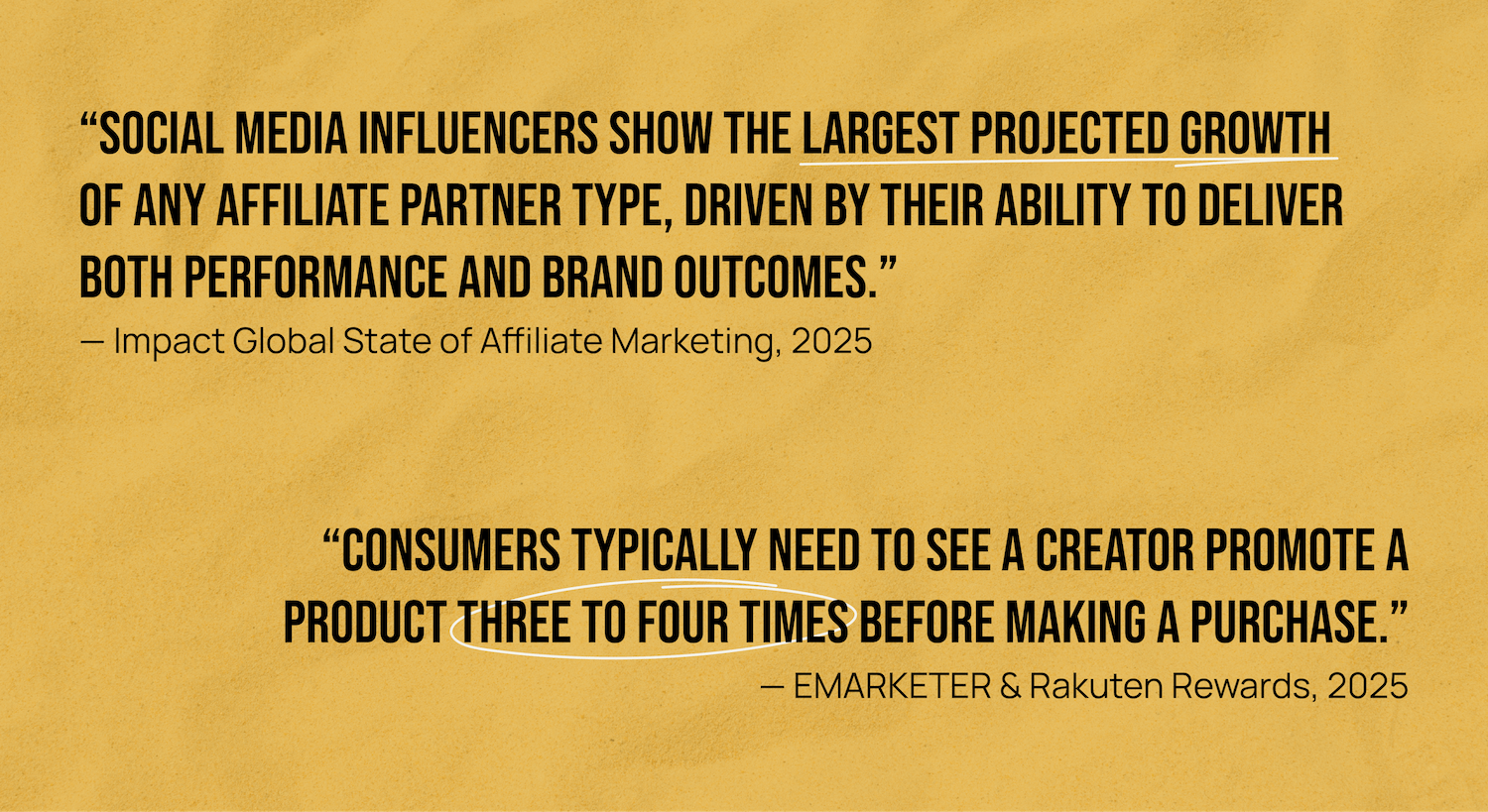
Creator partnerships continued to evolve within the affiliate space in 2025. Performance reinforced that creators often drive impact indirectly across the customer journey rather than at the final conversion touchpoint.
In 2026, brands should collaborate with a range of creators that speak to its consumers at different moments in their customer journey and seek always-on creator partnerships that position creators as long-term growth partners. In addition, it will be important to test payment models that reward creators based on impact, not just last-click conversion, and explore opportunities with evolving creator networks like YouTube Shopping, LTK and ShopMy. Success with creators requires aligning expectations, measurement and compensation to the value creators deliver.
Build Sustainable Partner Growth by Choosing Efficiency Over Scale
In 2025, many brands leaned heavily on short-term promotional periods to drive revenue spikes, often in response to economic pressure and aggressive revenue goals. While promotions can deliver immediate lifts, they don’t always translate into long-term partnership performance.
In 2026, brands should optimize for efficiency over scale. This means prioritizing quality of sales over volume, incremental partnership value over promotional dependency and partners that perform consistently outside of sale periods.
In addition, programs should reward partners who build trust, influence behavior and perform beyond promotional peaks. This requires decreasing reliance on short-term promotions and treating deal and incentive partners as tactical tools, not the foundation of a program.
Program success should be evaluated across the full funnel, recognizing that the most valuable partners aren’t always those driving the highest volume at the lowest cost, but those contributing to incremental, durable growth.
Leverage Different Compensation Models to Match Partner Impact
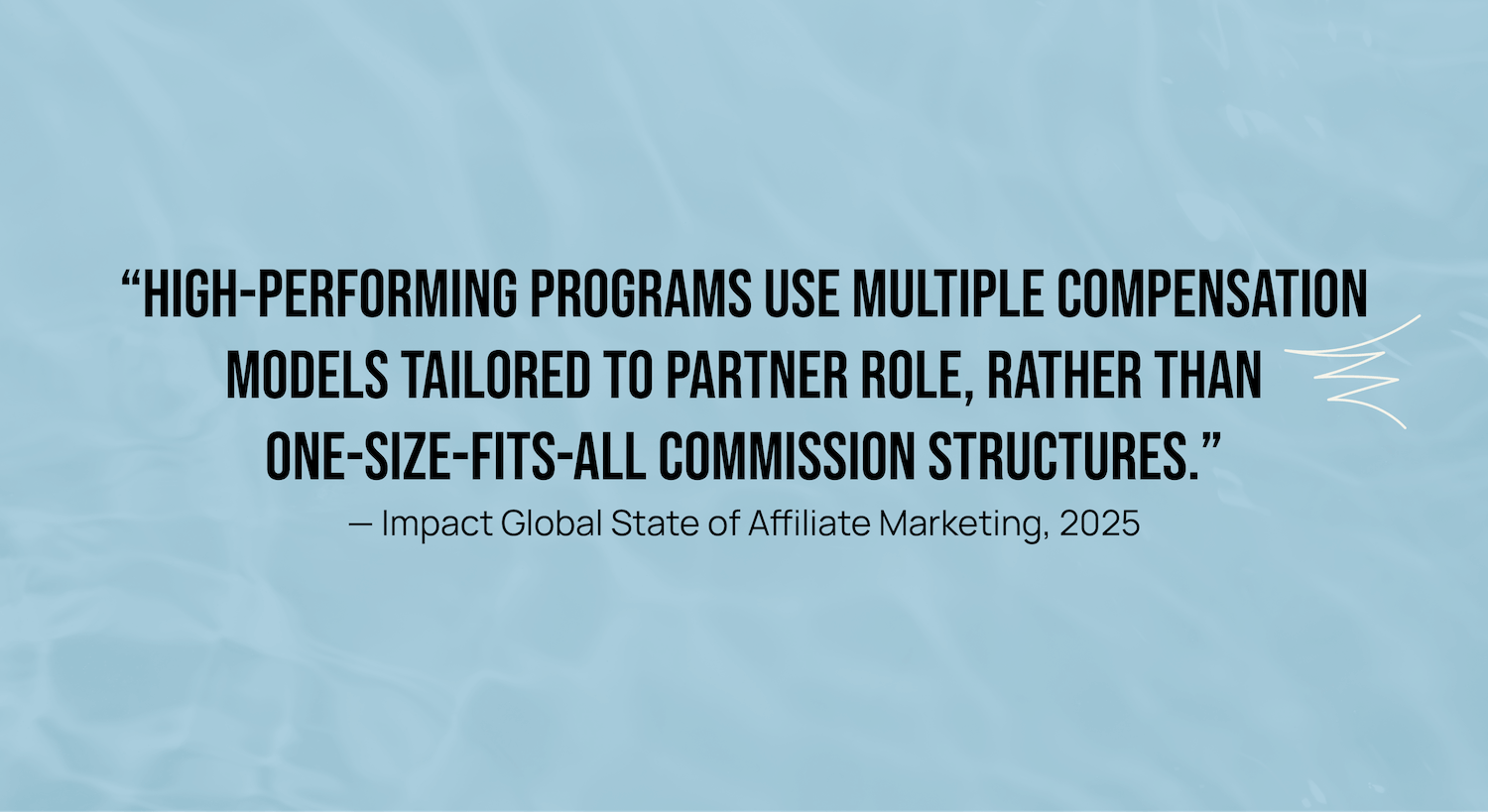
Many upper-funnel partners drive discovery and influence but lose out when programs reward solely on last-click conversion.
In 2026, one-size-fits-all attribution and compensation models won’t cut it. Brands are advised to test different attribution and compensation models that more accurately reward partner impact. It’s important to measure success based on each partner’s role in the customer journey to align investment with what’s truly driving incremental revenue. This approach supports healthier partner relationships and enables smarter, more effective program optimization.
Brands must also recognize that traditional measurement frameworks often undervalue affiliate’s impact. This year, successful brands will pair tailored compensation and attribution models with clearer internal education and advocacy to ensure affiliate is represented accurately in planning and budget conversations.
Looking Ahead
As the affiliate marketing landscape continues to evolve, you can count on rygr to provide insights-led strategies to help drive results.
If you’re interested in learning more about rygr’s affiliate capabilities, reach out to Madeline.Fones@rygr.us